

WHERE: Davis, CA
WHEN: December 2019
ROLE: Visual Designer, UX Designer (individual project)
TOOLS: InVision, Adobe Xd, Illustrator, Personas, Storyboarding, Wire-framing
Project Overview
This self-project was a way for me to rethink an existing design. I gave myself 4 hours to complete this challenge to see what rapid prototyping I could come up with. It turned out to be one of the most exciting experiences because it was the first time completing a project in less than a day. Sometimes time can help with the iterative process that design thinking involves, however, rapid prototyping with time constraints challenged me to manage my time effectively and not over think the process.
Problem Statement / Challenge
Design a better way for a mid-career professional who occasionally travels for work to find just the right vehicle when using the Hertz mobile app.
Strategy:
Brainstorm
Explore Hertz application
Read application customer reviews
Draft Personas
Storyboard user’s journey
Make a low-fidelity prototype
Brainstorming
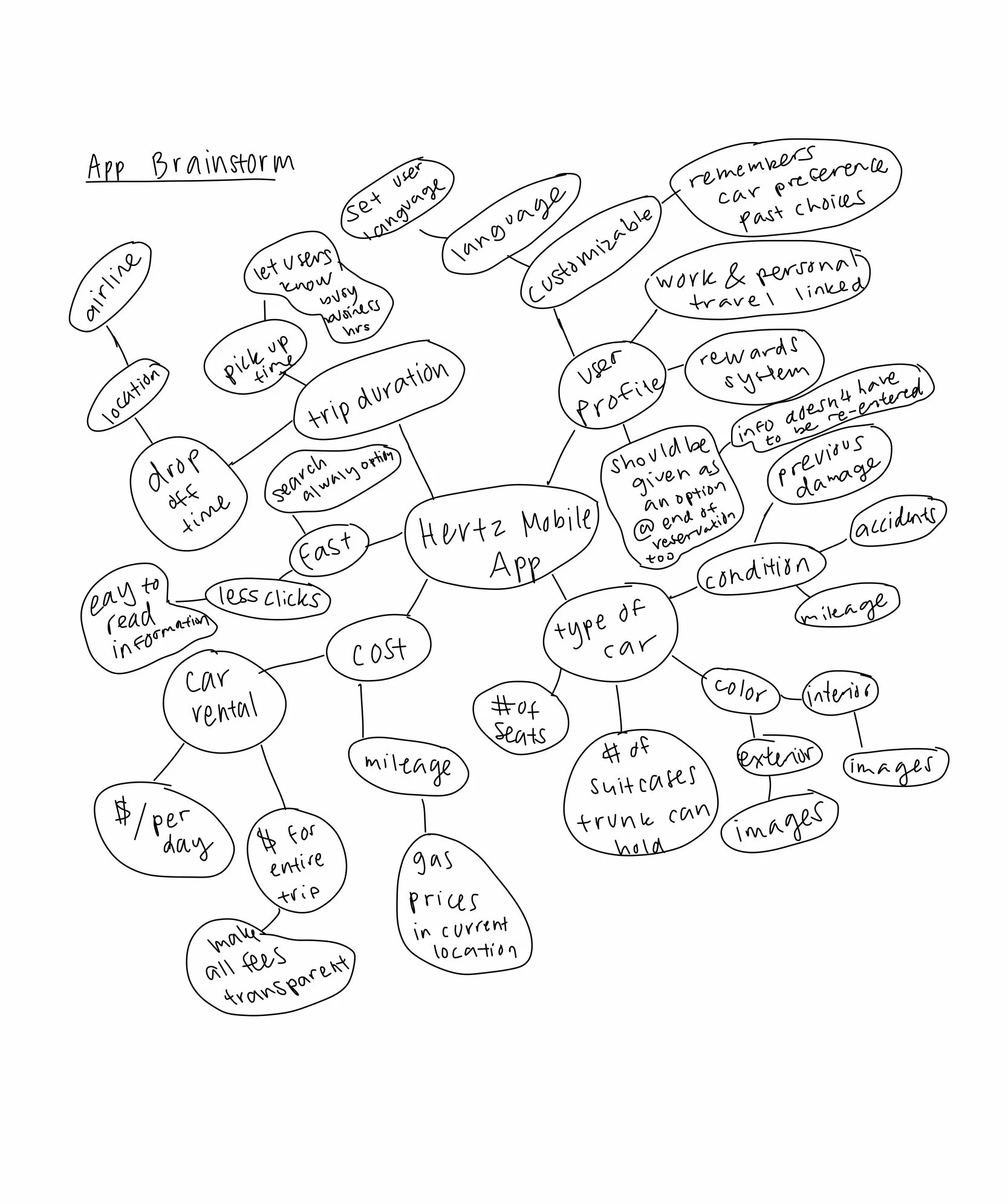
Mind-mapping out my thoughts, allowed me to see what parts the application entailed and which pieces of information were crucial in keeping. This also made it easy to see the information hierarchy to see what components were more broad versus specific.
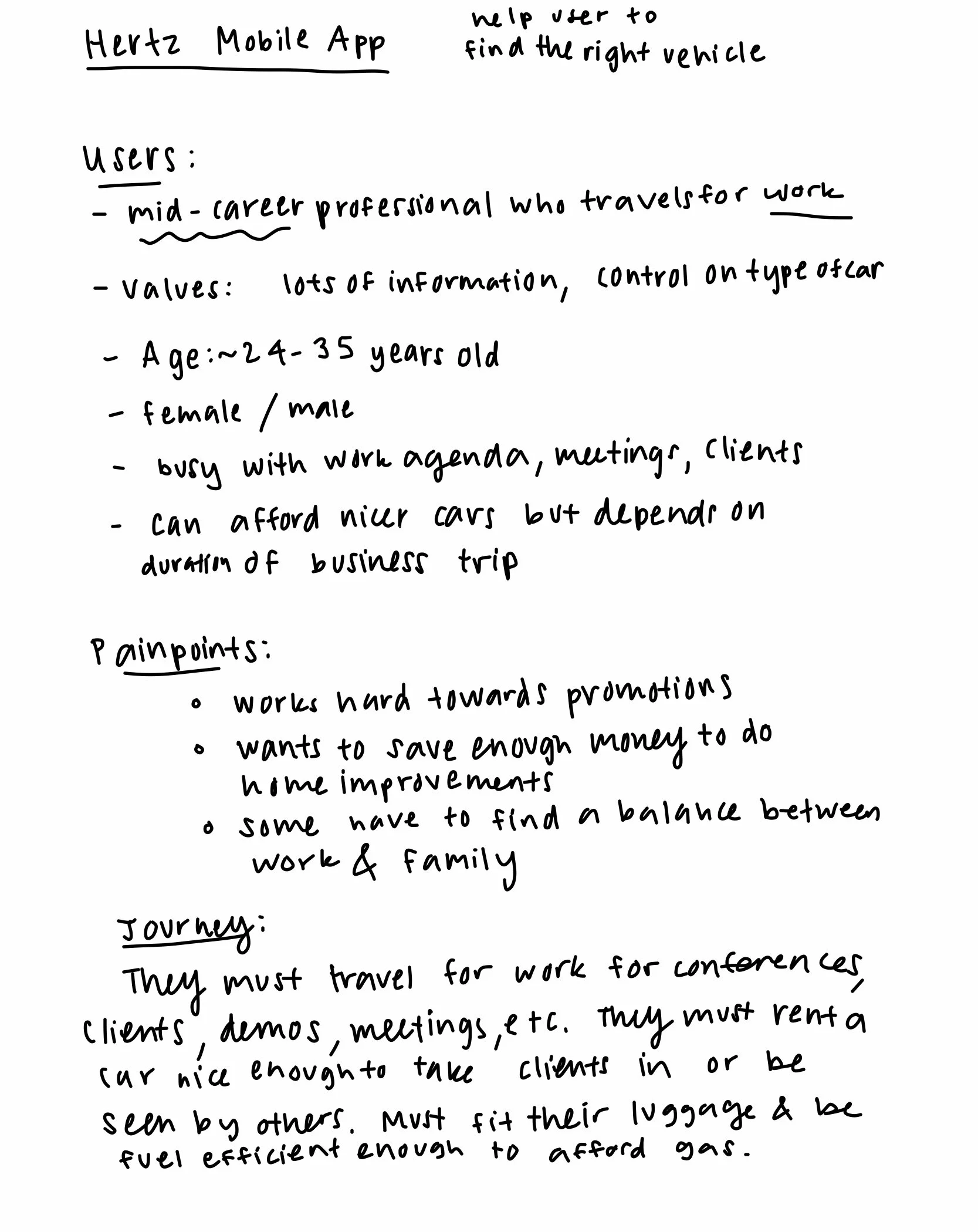
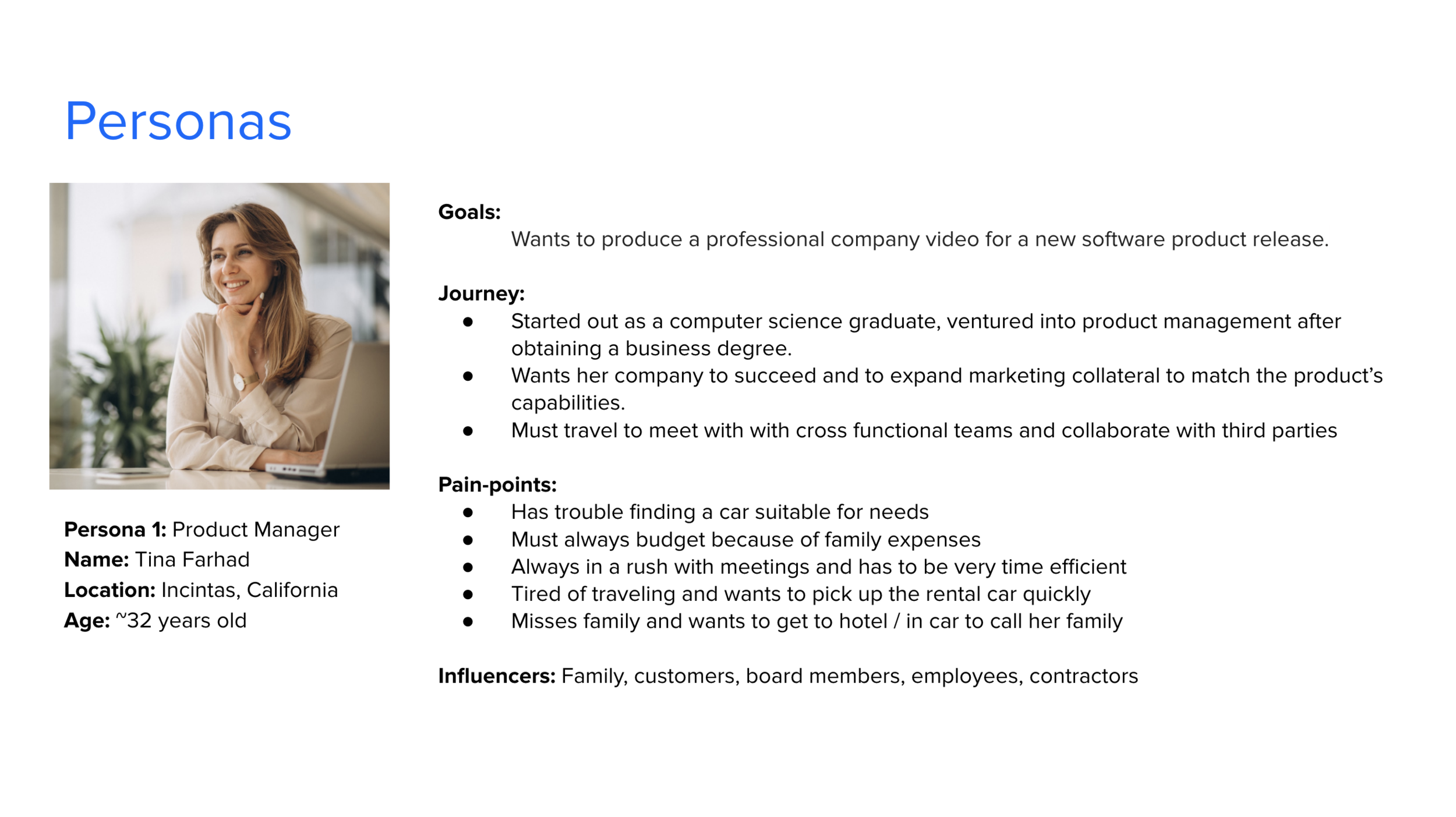
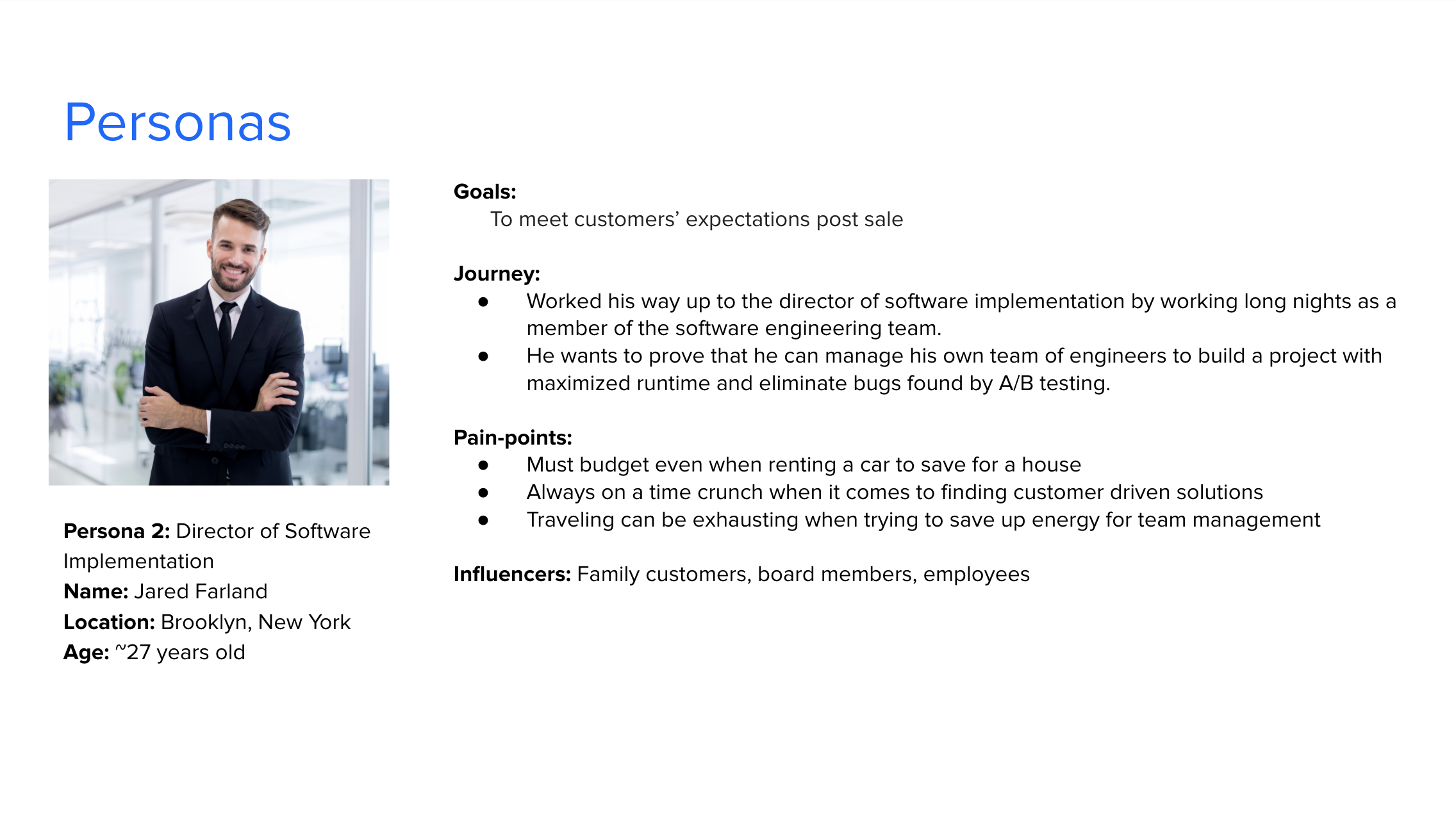
After reading reviews from the Apple App Store about the Hertz mobile app, I got a better understanding of who the main users were. Understanding what their daily struggles and point of view was, allowed me to make more specific personas and visualize their journey.
Personas
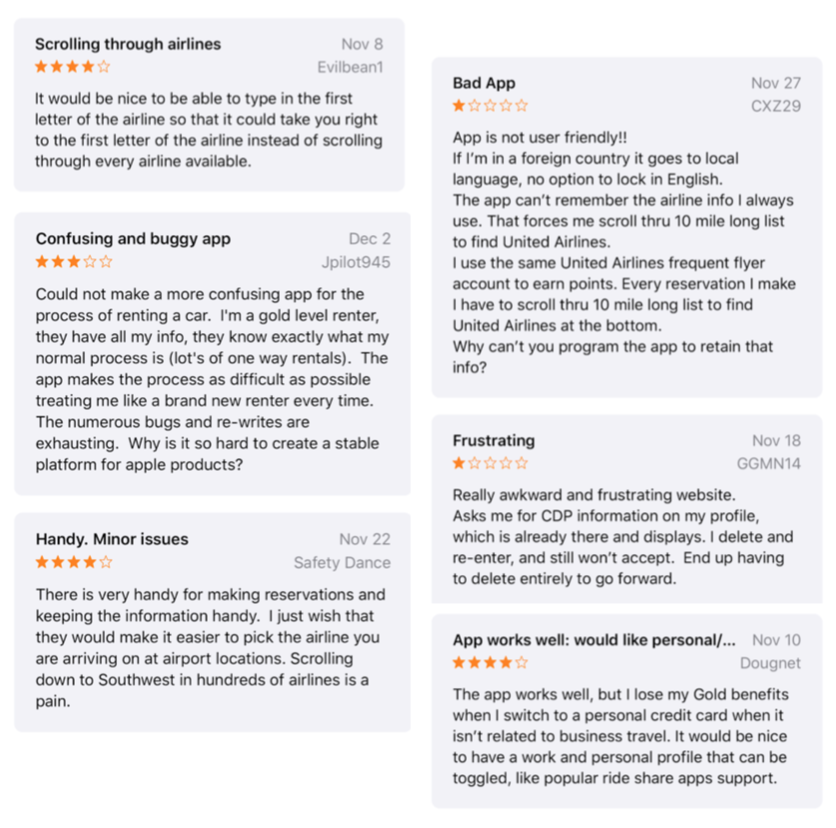
Specific User App Reviews
Personal profile for both work & personal
Airline search is tedious, need a search bar
Does not retain user data or preferences
Too much scrolling
Previous airline information is not saved
Too much re-entering information
Must rebuild profile from beginning
Lots of waiting frustration
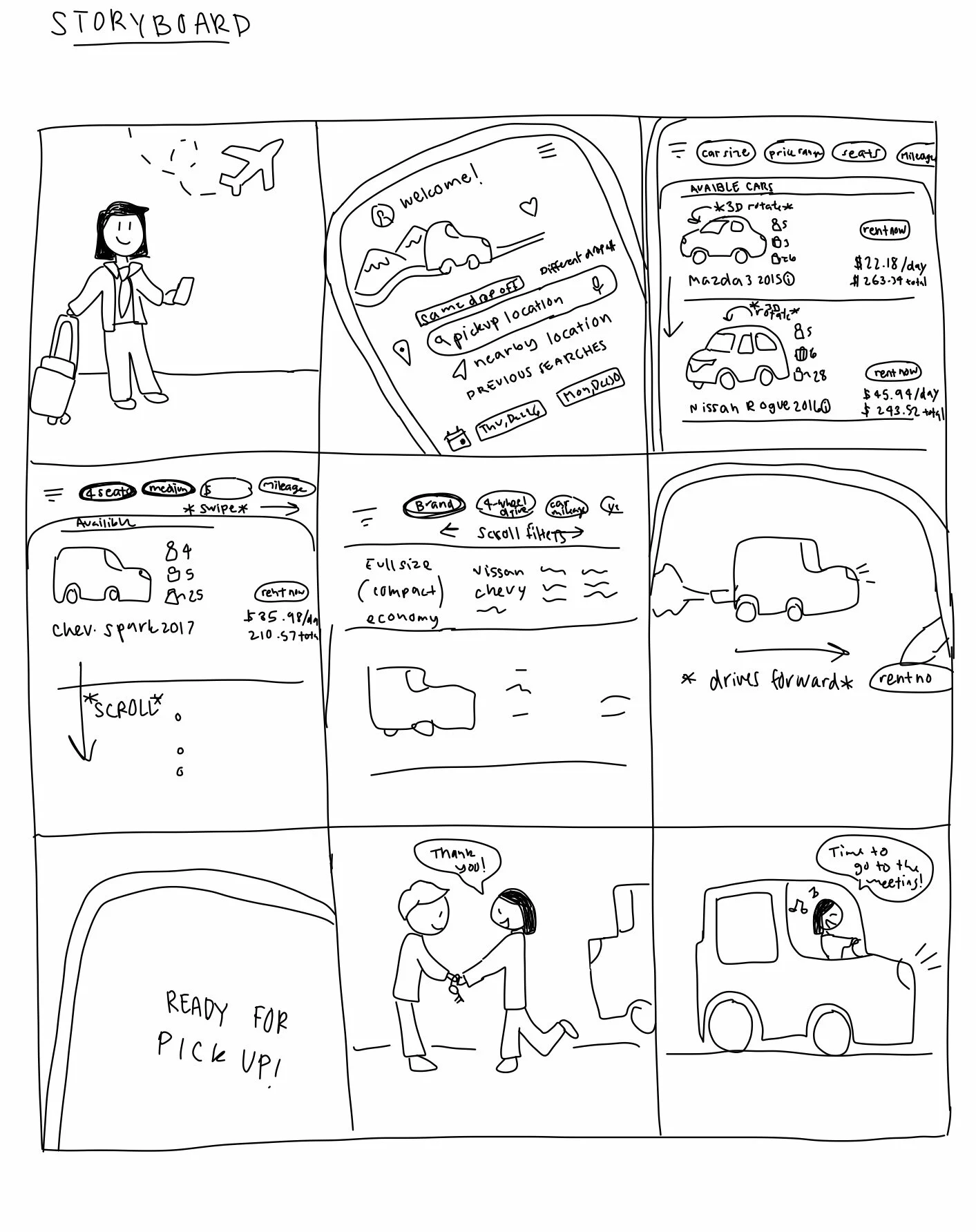
Storyboarding
Storyboarding allowed me to see the context in which the user was using the application and conceptualize which steps they needed to undergo to book their reservation.
Design Research Plan
Mock-up prototype will be used during A/B testing
Target group audience will be recruited in top growing cities, ages 24-35, paid testers
Another test will be sent via email with a chance to win a $200 Hertz gift card incentive
Users will be given a task to complete individually within 1-2 minutes for each prototype
User’s actions, behavior, responses, and post-survey answers will be used to validate assumptions
Results will be compared based on amount of time to complete each task and which prototype satisfied users most
Data synopsis will be characterized by a time comparison of each task for each prototype, hot buttons (which buttons were clicked the most), which buttons were untouched, and overall user satisfaction
Low-Fidelity Prototyping
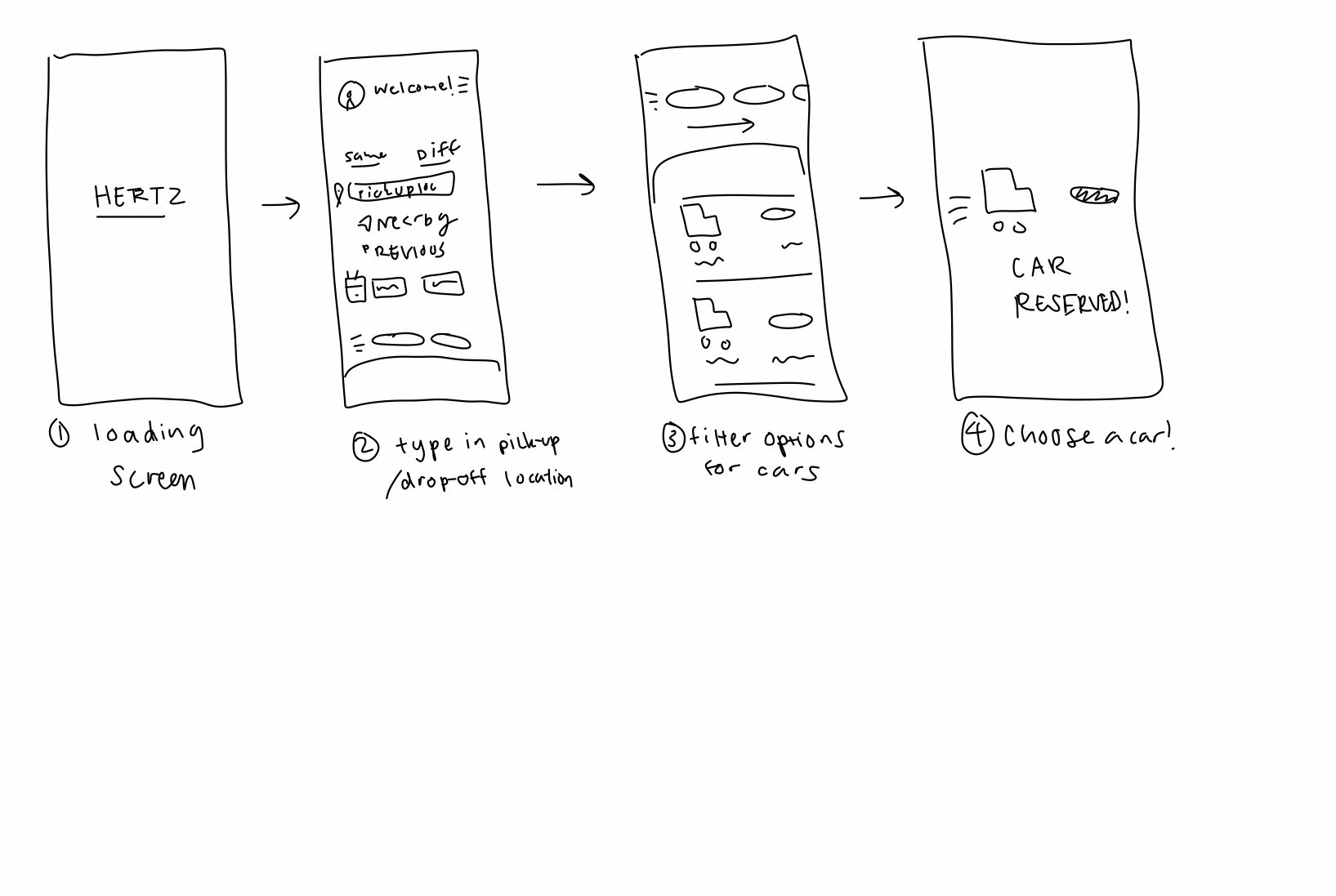
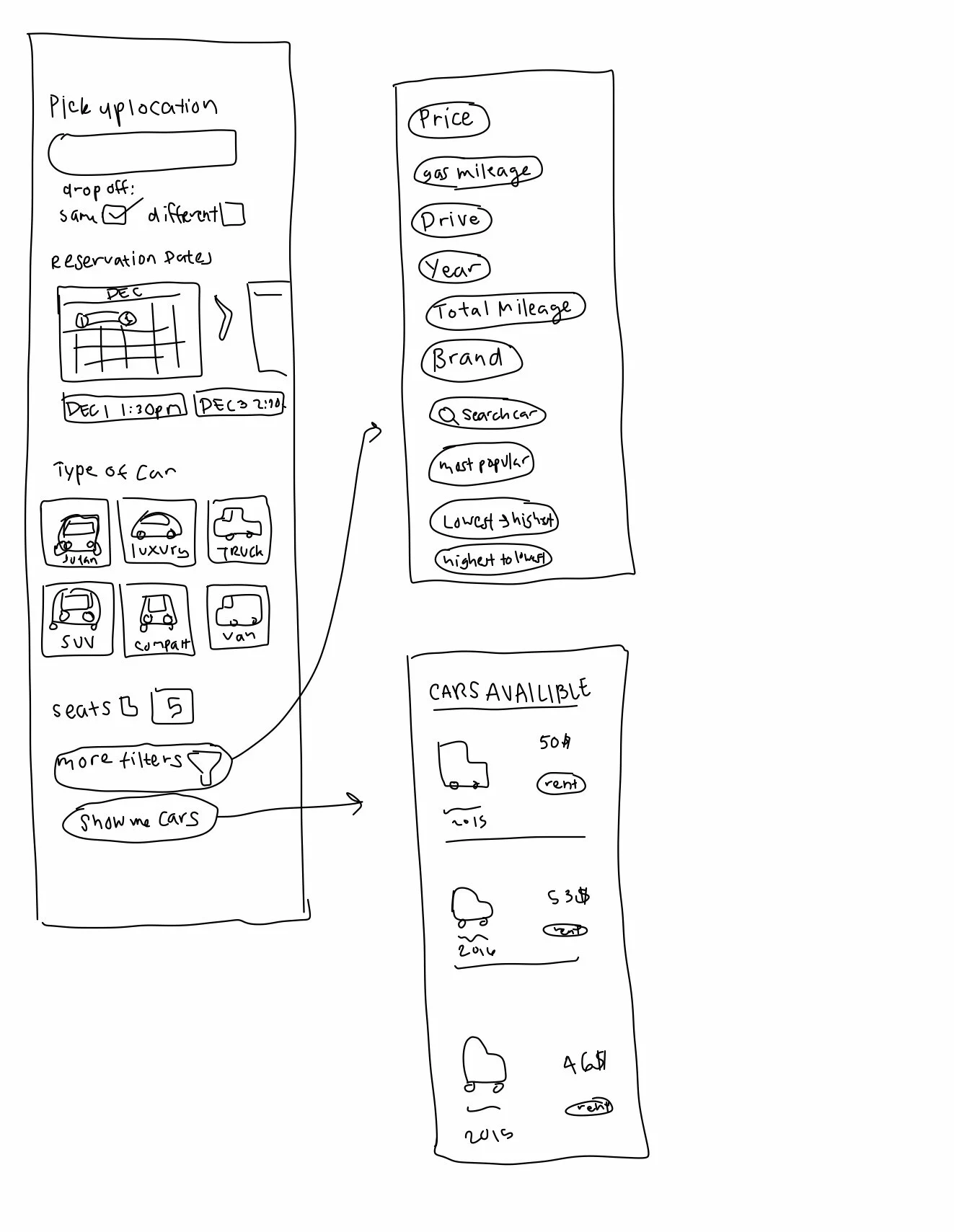
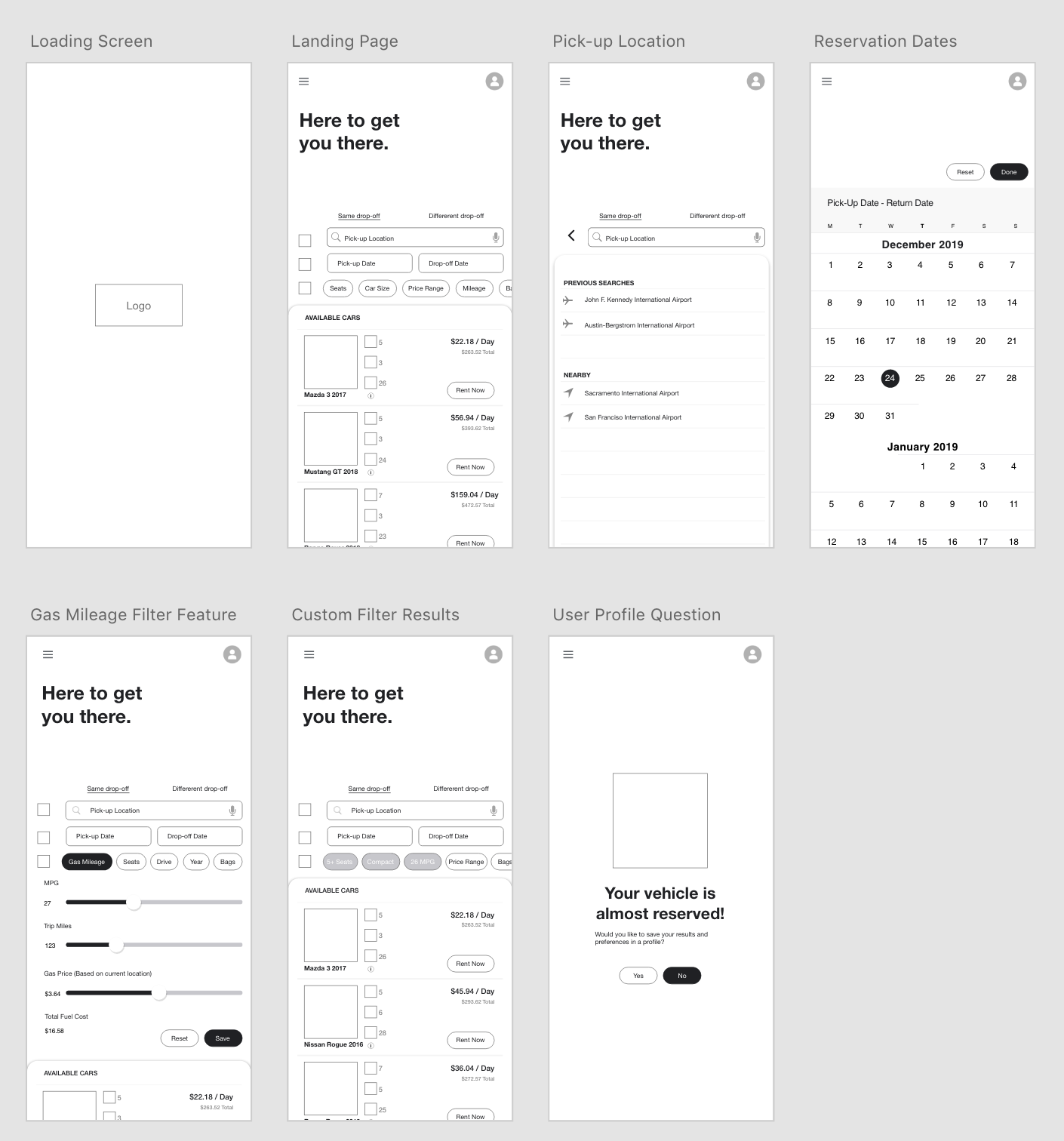
Mid-Fidelity Prototype
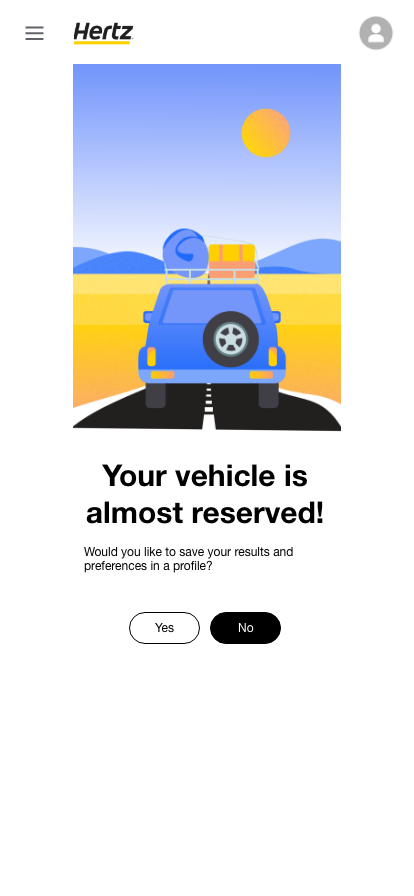
I made sure to put all the design specs users were wanting such as a search bar for airports, user profile option at the end to save user preferences, and more features to funnel the perfect car choice for the user eliminate endless scrolling.
Design Choices:
More filter options tailored toward user’s wants
Search option for airlines
User Profile Option
Gas Mileage / Fuel expense calculator
Previous airport Searches
Nearby airport display
Visual Design
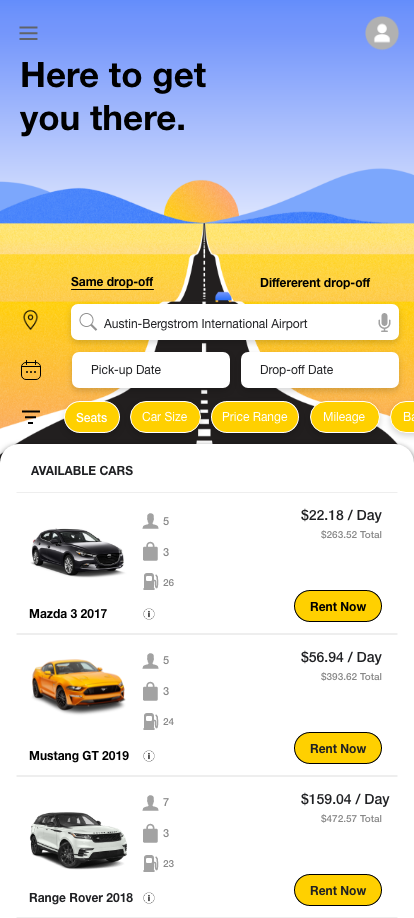
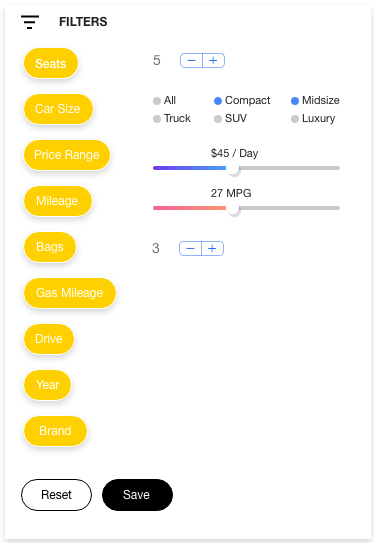
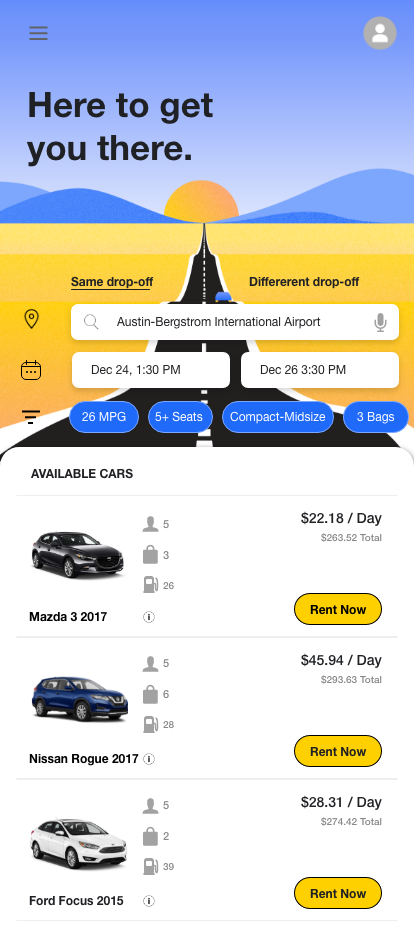
High-Fidelity Prototype
Other Considerations
After completing the Adobe Xd prototype within 4 hours of my challenge, I realized there were more iterations I wish I had more time for. This included adding a profile toggle feature where users can choose whether they are traveling for work or for personal reasons. I would also like to see how a purely graphical interface using only icons and images would perform in usability testing. Other ideas that I couldn’t implement due to time constraints include 3D interior views of the car, a car details page, more exploration with dream car displays, and other interactive filter features. Overall, I gained many time management skills from this rapid prototyping experience.
What I learned:
- How to rapidly prototype and manage my time effectively because it was a set timed challenge. I had to map out each part and make sure I didn’t spend too much time in one area. I was pleasantly surprised with what I came up with in that amount of time because usually I work on projects that span multiple weeks. Oddly enough, I really liked the fast pace I had to work in because it stopped me from over analyzing my work.
- How to conduct a brief research on an existing app. At first glance, I reviewed the existing design quickly, got an initial look at what I was going to be working with. I didn’t have enough time for a full detailed research study but I found ways to hear what users were thinking about the existing design. I was able to get so much feedback by just looking at the app reviews on the apple store website.
- People are more harsh, honest, and truthful when they leave reviews and comments online. Reading these app reviews, I could really hear their frustration. A problem I saw during in person user testing I saw in the past was some people would be too nice when giving their critiques.
- After addressing all of the user’s pain points by making design deliverables, you can enhance the experience by another level by having fun with the visual interactive components. By thinking about your personas and what would make their journey more seamless you can take those components and over deliver on convenience and really personalize the product.
Hopes and wishes:
I wish I could have done A/B testing to really see if my design fixed all pain points of my users but when you have limited time you have to just complete the task as best you can. The beauty of design is it will keep evolving along with people.